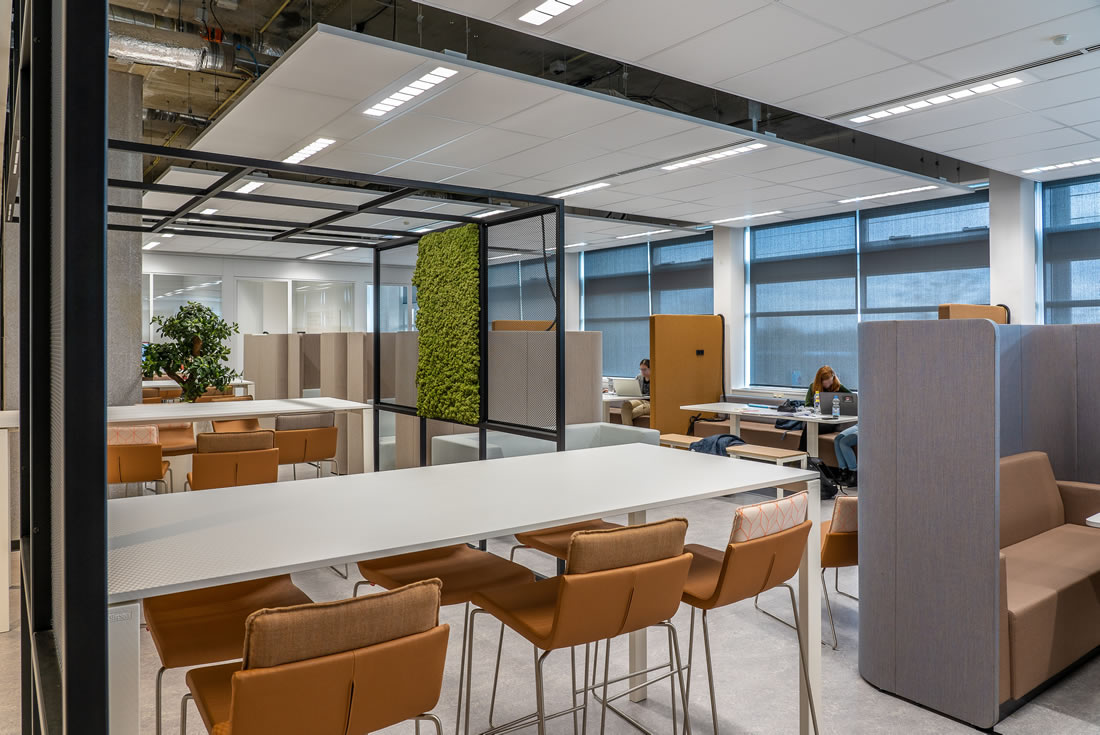
More landlords are rethinking how office space should perform
Commercial landlords used to measure success in fairly straightforward terms.
Secure a long lease. Keep occupancy high. Maintain the building. Protect rental income.
But that model is becoming a lot harder to rely on.
Businesses are taking less space, asking for shorter commitments and paying closer attention to the experience a building provides. Hybrid working has also made future space requirements much harder to predict, leaving many occupiers cautious about signing traditional long-term agreements.
At the same time, landlords are dealing with underused floors, longer void periods and greater pressure to keep buildings relevant in a competitive market.
Flexible workspace offers a practical option.
Rather than waiting for one large tenant to commit to an entire floor, landlords can create adaptable workspace products that appeal to smaller teams, growing businesses, enterprise project groups and hybrid workers.
JLL has previously projected that up to 30% of office space could be consumed flexibly by 2030. Even if the market develops more gradually than that, the direction is obvious.
Flexible workspace is becoming part of how commercial landlords think about asset performance, tenant retention and overall future demand.
The traditional leasing model is under pressure
The office market has changed significantly over the past few years.
Many occupiers still value physical workspace, but they want greater control over how much space they take and how long they commit to it.
A growing business may need 20 desks today and 40 in six months. Another organization may need temporary space for a project team. A larger company may want a regional hub without signing a ten-year lease.
Traditional leasing structures struggle to accommodate that level of movement.
This creates a difficult position for landlords. Holding out for a large conventional tenant may leave valuable space empty for months, while accepting a smaller occupier on traditional terms may not suit the long-term asset plan.
Flexible workspace solutions give landlords another option.
They can divide underused space into private offices, managed suites, coworking areas, meeting rooms and shared amenities that serve a wider mix of customers.
That helps a building respond to demand as it changes.
Flexible workspace creates more resilient buildings
The value of flexible workspace goes beyond filling vacant floors.
A well-run flexible offer can support the wider building by creating more activity, attracting new occupiers and giving existing tenants room to change without leaving the property altogether.
For a commercial landlord, the potential benefits include:
● Faster occupation of vacant or underused space
● New income from meeting rooms, memberships and additional services
● Better retention when tenants grow or reduce their footprint
● More footfall for cafés, gyms and other on-site amenities
● A stronger proposition for businesses comparing buildings
● Greater insight into how space is being used
Consider a tenant that needs to reduce its permanent office after introducing hybrid work.
Without flexible space in the same building, that business may move elsewhere entirely.
With managed offices or coworking available on-site, the landlord may be able to retain the occupier within the asset while giving it a more suitable arrangement.
Flexible space can also act as a route into the building for smaller organizations that may later move into conventional leased offices.
In that sense, it supports both short-term occupancy and longer-term tenant relationships.
Management agreements are changing landlord and operator relationships
Many landlords understand the opportunity but do not want to become workspace operators themselves.
Running a flexible workspace involves a different level of day-to-day involvement from traditional leasing. Teams need to handle sales enquiries, tours, proposals, customer onboarding, room bookings, services, billing and member support.
This is why management agreements and revenue-share structures have become so important.
Under a management agreement, a specialist operator runs the workspace on behalf of the building owner. The landlord and operator share an interest in making the space perform, rather than relying on a fixed master lease that places most of the risk on one party.
These partnerships can give landlords:
● Access to operational expertise
● More control over the customer offer
● Better alignment between the workspace and the wider building
● Shared visibility into performance
● A lower-risk route into the flexible workspace market
The right structure depends on the building, the local market and the landlord's commercial goals.
What matters is that responsibilities are clearly defined from the beginning.

Commercial landlord responsibilities become more operational
Flexible workspace also changes the practical side of managing a property.
Traditional commercial landlord responsibilities often centre on the building itself, including maintenance, safety, common areas and the obligations outlined within each lease.
A flexible operation introduces a much more active customer environment.
There may be dozens or even hundreds of users moving through the building, booking rooms, changing memberships and purchasing additional services. Private offices may turn over more frequently, while shared facilities need to remain available, presentable and easy to use.
Commercial lease landlord responsibilities are still important, but they sit alongside a wider set of operational expectations.
Landlords and operators need clarity around:
● Building maintenance and repairs
● Technology and connectivity
● Cleaning and shared facilities
● Health, safety and access
● Customer service
● Billing and service charges
● Data and performance reporting
Without clear processes, even small issues can affect the customer experience and the commercial performance of the space.
Experience now influences the value of the building
Occupiers are paying attention to how a workplace feels as well as what it costs.
A fitted office with reliable technology, good meeting facilities and welcoming communal areas may be far easier to sell than a traditional empty floor that requires months of planning and capital investment.
Flexible workspace can help landlords turn the building into a service-led environment.
The strongest offers often include:
● Private offices and managed suites
● High-quality meeting rooms
● Collaboration and breakout areas
● Reception and hospitality services
● Virtual office options
● Event space
● Fast, reliable connectivity
● Simple digital booking and customer support
These features can make the whole property more attractive, including to traditional tenants.
A tenant may not need a large conference suite inside its own demise if it can book one elsewhere in the building. Shared facilities can improve the occupier experience while allowing office floors to be used more efficiently.
Technology becomes the operational foundation
Flexible workspace can create value, but it also creates complexity.
A commercial landlord or operating partner may need to manage:
● Sales leads and follow-ups
● Tours and proposals
● Office and desk inventory
● Licence agreements
● Electronic signatures
● Meeting room reservations
● Memberships
● One-off services
● Billing and invoicing
● Management reports
Trying to coordinate all of this through spreadsheets, email and separate systems leaves plenty of room for missed charges, duplicated work and inconsistent reporting.
This is where coworking software for landlords and workspace operators becomes important.
UltraSoftBIS Cloud is an integrated SaaS platform created for operators of flexible workspaces, serviced offices, managed spaces, business centres, science parks and innovation hubs.
Its modular system brings together:
● Salesforce and follow-up automation
● Proposal generation
● Contract and licence automation
● Electronic signatures
● Customer and inventory management
● Coworking and membership management
● Hotdesk and meeting room booking
● One-off and bulk invoicing
● Paperless invoice delivery
● KPI reporting and intelligent analytics
Landlords and operators can choose the functions that fit their current needs, then add further modules as the workspace grows.
By connecting the customer journey from first enquiry through to billing and reporting, teams gain clearer information and spend less time moving between disconnected processes.
Flexible workspace is becoming part of long-term asset strategy
Flexible workspace gives commercial landlords a way to respond to changing tenant demand while improving how office buildings are used.
It can activate vacant space, support existing occupiers, attract new customer groups and create additional revenue across the property.
The opportunity is significant, but success depends on the details.
Landlords need the right operating model, clear responsibilities, a strong customer offer and technology that can handle the complexity behind it.
With those foundations in place, flexible workspace can become a valuable part of a broader commercial real estate strategy rather than a short-term answer to vacancy.
Ready to support flexible workspace within your property portfolio?
UltraSoftBIS Cloud helps commercial landlords and workspace operators automate sales, proposals, contracts, bookings, billing and reporting within one intelligent, modular platform.
Book a demonstration today and discover how UltraSoftBIS Cloud can support a more efficient and scalable flexible workspace strategy.