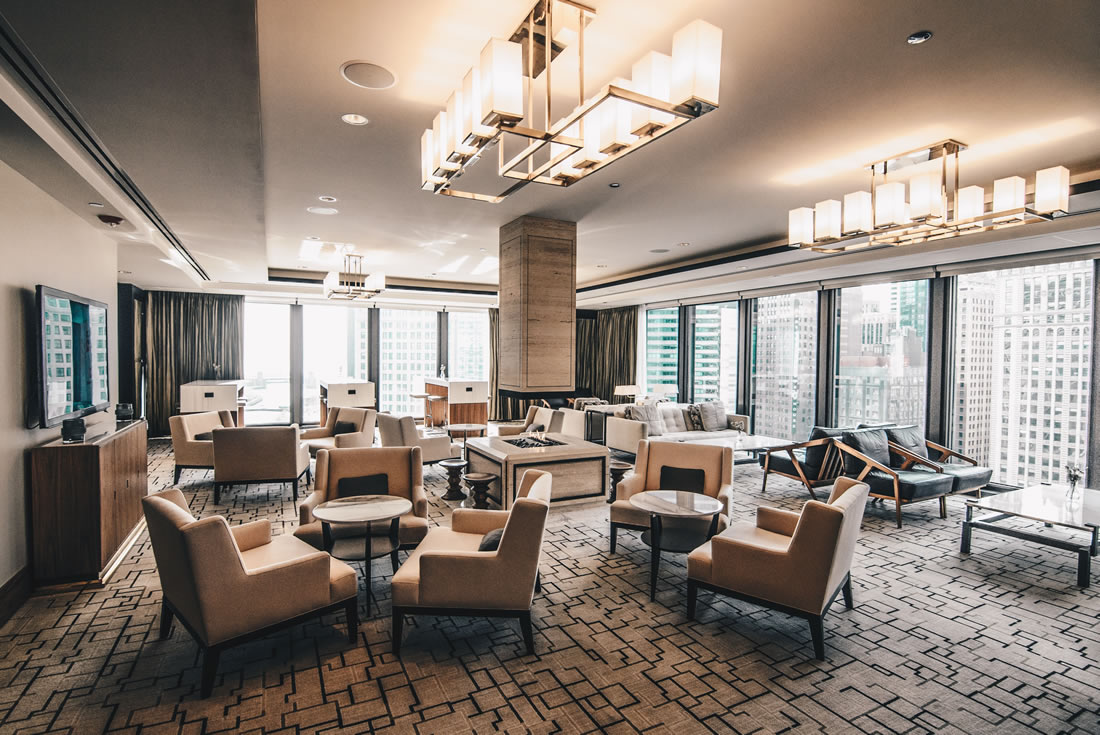
This type of workplace experience is becoming a competitive advantage
Not long ago, flexibility was the main selling point of a flexible workspace.
Businesses wanted shorter commitments, lower upfront costs and the ability to grow without being tied to long leases. For many operators, that was enough to attract members and maintain occupancy.
Today, expectations are hugely different.
Companies still want flexibility, but they are also paying close attention to the experience employees have when they come into the workplace. The quality of the environment, the level of service, the ease of using facilities and the overall atmosphere all influence how a workspace is perceived.
Recent data from the WELL Coworking Rating highlights how quickly the sector is evolving. Interest in flexible workspace has increased by 13% over the past year, while 30% of enquiries now come from organizations looking for space for teams of 26 desks or more. At the same time, average flex desk pricing increased during 2024, reflecting continued demand across the market.
As flexible workspace grows, operators are finding themselves competing on much more than location and pricing.
In many cases, they're competing on experience.
That's why one of the biggest hospitality trends is now making its way into the flexible workspace sector.
The most successful operators are beginning to think less like landlords and more like hospitality brands as a whole.
Flexible workspace has moved further than the desks and square footage
Walk through a premium flexible workspace today and you'll quickly notice that the conversation is no longer centred around desks.
Occupiers want spaces that support collaboration, help attract talent and create a positive environment for employees and visitors. They expect high-quality meeting facilities, reliable technology, welcoming communal areas and services that make daily working life easier.
This shift can be seen across the market.
A recent example is Tower 49 in New York, where a major redevelopment is focused on creating a stronger workplace experience. The project includes a dedicated conference centre, hospitality-focused lounges, wellness amenities, flexible event spaces and food and beverage offerings designed to serve both traditional tenants and flexible workspace users.
The thinking behind these investments is simple.
If people have a choice about where they work, the workplace itself needs to offer value.
That value increasingly comes from convenience, service, comfort and experience.
For flexible workspace providers, this represents an important change. Workspace is no longer viewed purely as real estate, instead, it is becoming a service-led product.
Wellness is becoming part of the workplace experience
Wellness has become one of the clearest examples of this transition.
Earlier this year, Boston-based operator The Village Works became the first flexible workspace in the United States to achieve the WELL Coworking Rating.
The certification evaluates nearly 50 factors relating to health and wellbeing, including air quality, lighting, thermal comfort, movement and workplace design.
What makes this significant is not the certification itself but what it represents.
Occupiers are becoming increasingly selective about the environments they choose.
Many employees now split their time between home, client sites and office locations. When they do come into a workspace, they expect an environment that supports productivity and wellbeing.
Natural light, ergonomic furniture, comfortable communal spaces and healthier working environments are increasingly viewed as essential features rather than premium extras.
For operators, wellness is becoming an serious part of how a flexible workspace differentiates itself in a crowded market.
Hospitality is about service, not amenities
When hospitality-led workspaces are discussed, the focus often falls on visible features.
● Coffee bars
● Designer furniture
● Wellness rooms
● Lounges and event spaces
While these amenities contribute to the overall experience, they are not what creates hospitality.
Hospitality is ultimately about service.
It is about how people feel when they interact with a business.
The operators generating the strongest member loyalty are often those that consistently deliver small moments that make customers feel valued.
That might include:
● A smooth onboarding process
● Fast responses to customer requests
● Seamless meeting room bookings
● Staff who know members by name
● Proactive communication when issues arise
● Consistent service standards across every location
These details are easy to overlook, yet they often have a greater impact on customer satisfaction than expensive amenities.
People remember how a workspace makes them feel.
That principle has long been understood in hospitality. Flexible workspace operators are increasingly recognising its importance too.
Delivering hospitality consistently requires strong operations
Creating a hospitality-led environment is one thing, but delivering it consistently every day is something else entirely.
As operators expand into multiple locations, introduce new services and manage larger customer bases, maintaining service quality becomes increasingly difficult.
Teams are often managing:
● Memberships
● Private offices
● Managed spaces
● Meeting rooms
● Event spaces
● Virtual offices
● Customer enquiries
● Billing and invoicing
● Reporting requirements
When these activities are managed through disconnected systems or manual processes, friction starts to appear.
Bookings are missed.
Customer information becomes fragmented.
Invoices take longer to process.
Staff spend more time chasing information than supporting customers.
The customer experience suffers as a result.
This is where service operations workspace technology becomes critical.
The quality of customer service is often determined by what happens behind the scenes.
Why technology is becoming the foundation of hospitality-led workspaces
The best hospitality experiences often appear effortless.
In reality, they are supported by well-structured systems that allow teams to operate efficiently and respond quickly.
The same applies to flexible workspace.
At UltraSoftBIS, we work with operators of flexible workspaces, serviced offices, managed spaces, meeting rooms and business centres who are looking to simplify increasingly complex operations.
UltraSoftBIS Cloud brings together sales automation, proposal management, licence agreements, room bookings, customer management, billing and reporting within one connected platform.
Rather than moving between multiple systems, teams can access the information they need from a single environment.
This helps operators:
● Improve operational efficiency
● Reduce manual administration
● Deliver faster customer service
● Maintain consistency across locations
● Gain better visibility into business performance
Most importantly, it gives teams more time to focus on customers rather than paperwork.
Hospitality relies on people.
Technology simply makes it easier for those people to deliver exceptional service consistently.
The future of flexible workspace is experience-led
The flexible workspace sector has matured significantly over the past decade.
Flexibility remains important, but it is no longer the only factor influencing workplace decisions.
Occupiers increasingly expect workplaces that support wellbeing, foster collaboration and provide a seamless customer experience. The operators attracting long-term loyalty are those that understand that workspace is becoming a service-led business as much as a real estate business.
The strongest operators are combining hospitality principles, thoughtful design, wellness initiatives and operational excellence to create environments where people genuinely want to spend time.
As competition continues to increase, the ability to deliver that experience consistently will become one of the industry's strongest advantages.
Ready to support a hospitality-led workspace experience?
UltraSoftBIS Cloud helps operators of flexible workspaces, serviced offices, managed spaces, virtual offices and business centres automate sales, bookings, billing, reporting and customer management within one intelligent platform.
Book a demonstration today and discover how UltraSoftBIS Cloud can help you deliver exceptional customer experiences while simplifying day-to-day operations.